Device Pathways Connecting Registration Flows to Mid-Event Market Shifts in Team and Racket Sports
Written by Eden Werner · Sep 30, 2026
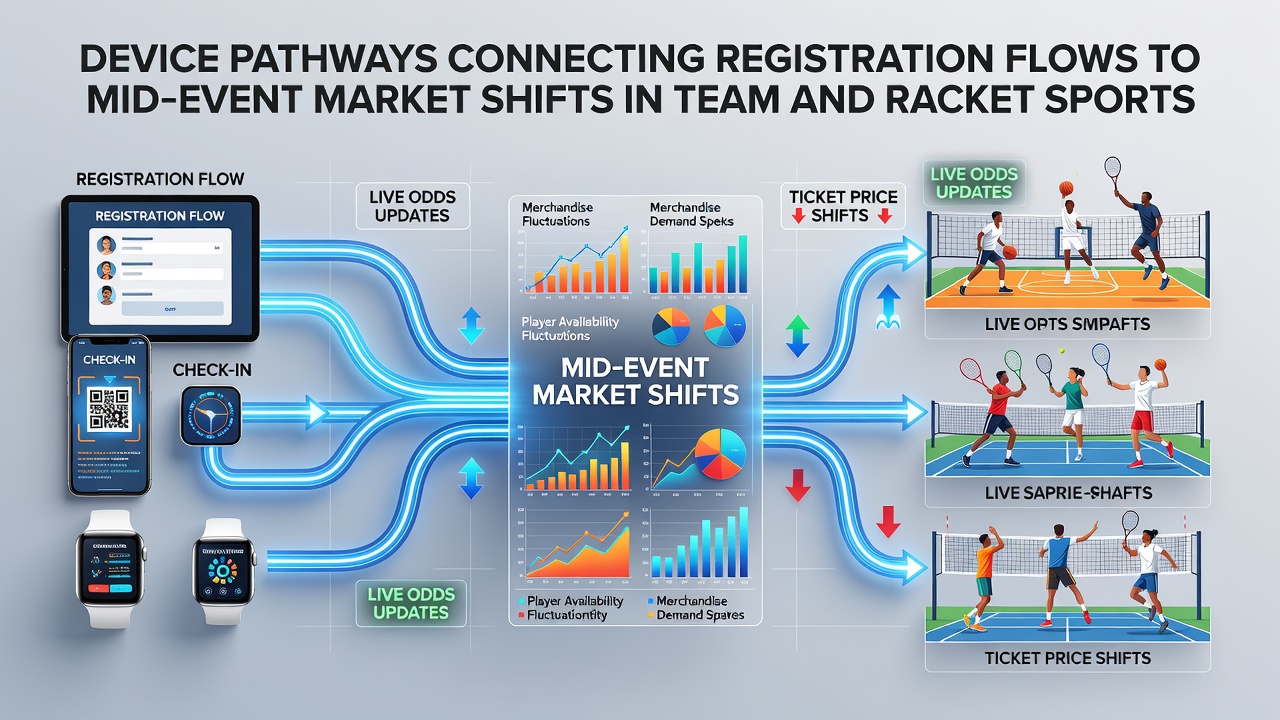
Device Pathways Connecting Registration Flows to Mid-Event Market Shifts in Team and Racket Sports
Registration processes on mobile devices establish the initial connection points that allow users to access evolving market conditions during team and racket sports events, and these pathways integrate user data entry with real-time information streams from professional matches in basketball, soccer, tennis, and similar disciplines. Observers note that the sequence typically starts with account creation steps on smartphones or tablets, where basic verification occurs before granting entry to dynamic pricing mechanisms that respond to in-game developments such as player substitutions or point accumulations.
Registration Flows on Mobile Platforms
Users complete profile setup through app interfaces that collect identification details and payment preferences, after which system protocols route this information toward live data servers that monitor ongoing competitions. Research indicates these flows rely on standardized APIs to synchronize personal accounts with event feeds, enabling market adjustments to occur without additional user intervention once the initial onboarding concludes. Data from industry reports shows that completion rates for such registrations increase when interfaces minimize steps, allowing quicker transitions to active event monitoring in sports where scores change rapidly.
Market Adjustments During Team Sports Events
In basketball and soccer competitions, mid-event market shifts reflect alterations in team performance metrics, and device pathways transmit these updates through secure channels that update odds displays on user screens within seconds of official data releases. According to figures from the American Gaming Association, transaction volumes tied to live markets in these sports rose notably during the 2026 season, with September recordings highlighting increased activity around major league fixtures. The pathways function by linking registration credentials directly to backend algorithms that recalculate probabilities based on variables including possession statistics and injury reports, creating continuous feedback loops visible on handheld devices.
Racket Sports and Dynamic Device Integration
Tennis matches present distinct challenges for device connectivity because point-by-point scoring demands frequent updates, yet registration flows ensure that once accounts activate, users receive notifications tied to set changes or serve statistics. Those who have examined platform architectures observe that mobile systems employ geolocation checks alongside initial sign-up data to maintain compliance while delivering market revisions, and this integration supports participation across international events without requiring repeated logins. Evidence from academic studies on digital sports interfaces suggests that streamlined pathways reduce latency between registration confirmation and access to shifting lines, particularly in racket disciplines where momentum swings occur abruptly.
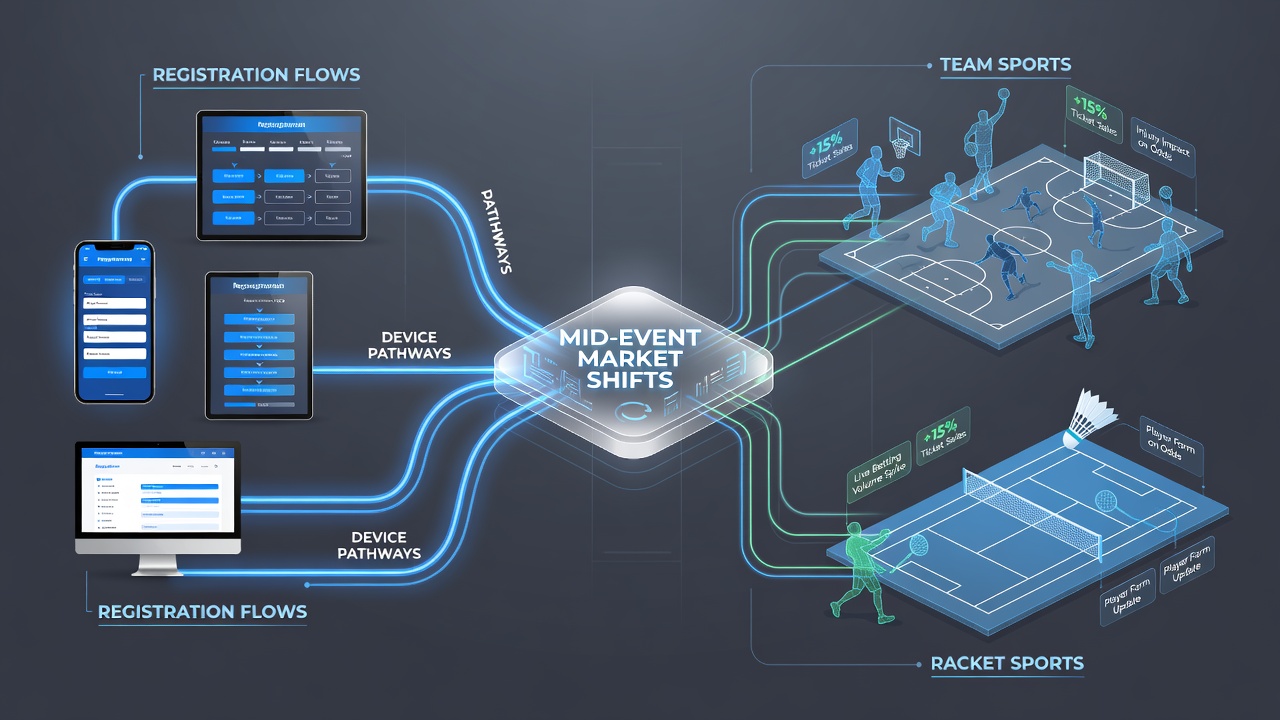
Technological Elements Linking Onboarding to Live Shifts
Cloud-based synchronization tools form the backbone of these connections, allowing registered devices to pull incremental data from official scoring systems while events progress, and operators in regions such as Australia have documented similar patterns through oversight reports issued by state gaming authorities. The process incorporates encryption protocols established during the registration phase, which then govern how market modifications appear in user dashboards without disrupting session continuity. Researchers have documented that September 2026 saw expanded testing of 5G network enhancements, which further accelerated data transmission speeds for participants following team and racket sports simultaneously on single devices.
Pathway efficiency also depends on backend analytics that correlate user registration timestamps with peak event periods, generating insights into how early account activation correlates with engagement during volatile market phases in soccer or tennis. Government data compiled by Canadian provincial regulators reveals steady growth in mobile session durations when initial flows include tutorial elements that explain live update mechanisms, thereby guiding new participants toward informed navigation of shifting conditions.
Conclusion
Device pathways that connect registration flows to mid-event market shifts continue to evolve through refinements in mobile infrastructure and data integration standards, supporting broader access to real-time information across team and racket sports. These systems maintain operational consistency by embedding verification processes at the outset, which in turn facilitate responsive market environments as competitions unfold throughout seasons like the one observed in 2026.