Decoding the Technical Frameworks Supporting Odds Fluctuations During Professional Matches in Mobile Environments
Written by Iris Otto · Aug 8, 2026
Decoding the Technical Frameworks Supporting Odds Fluctuations During Professional Matches in Mobile Environments
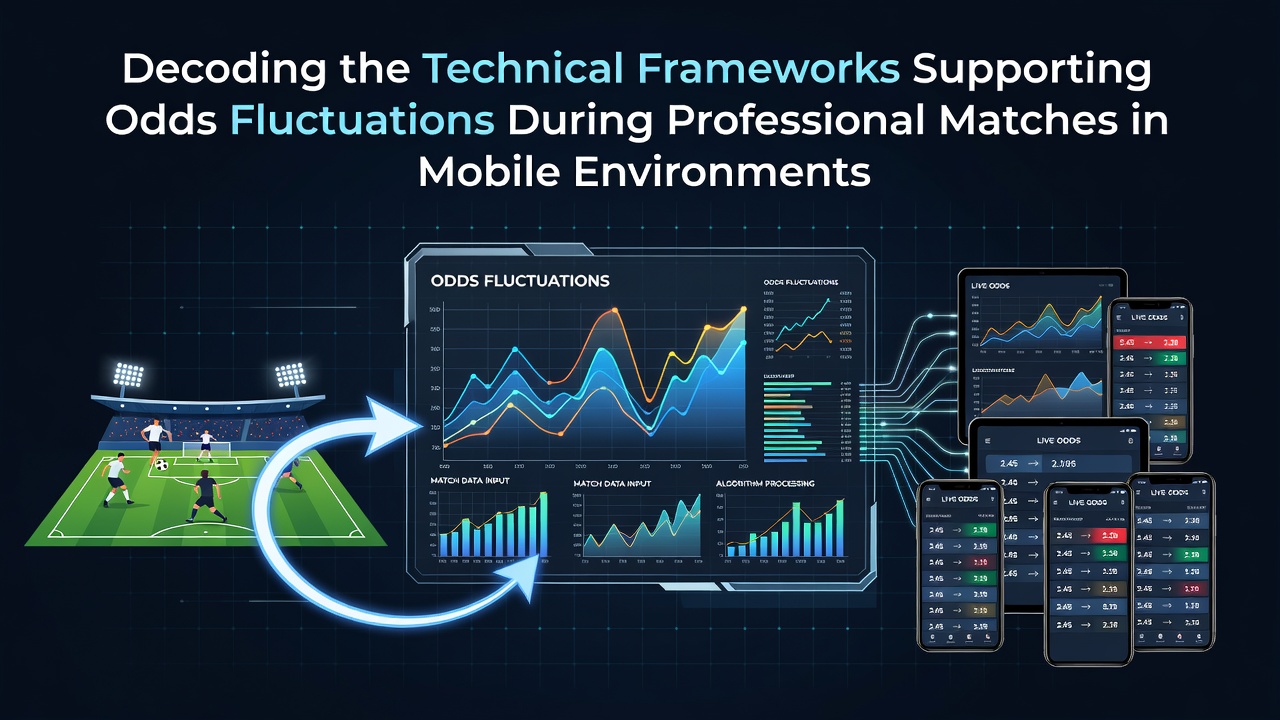
Odds in professional sports shift rapidly once matches begin and mobile applications deliver those changes through layered technical systems that combine data ingestion, algorithmic processing, and client-side rendering. Operators rely on multiple incoming feeds from stadium sensors, official league statistics providers, and third-party data aggregators that push updates every few seconds during live events. These inputs reach centralized servers where proprietary models recalculate probabilities based on current score, time remaining, player substitutions, and historical performance patterns.
Data Ingestion and Real-Time Processing Layers
Professional leagues transmit structured event data through secure APIs that mobile betting platforms consume continuously, yet the volume spikes dramatically when goals, points, or turnovers occur. Engineers design ingestion pipelines using message queues and distributed computing frameworks to handle thousands of concurrent updates without dropping packets. Research from institutions such as the University of Nevada Reno indicates that average latency between an on-field event and an updated market can fall below 800 milliseconds when fiber connections and edge servers operate in tandem.
Algorithms evaluate each new data point against pre-match baselines while applying weighting factors that account for momentum shifts and remaining game duration. Machine learning components trained on millions of historical matches refine those weights dynamically so that a late defensive stop in basketball receives different emphasis than an identical play earlier in the contest. Servers then broadcast revised odds to connected mobile clients through WebSocket connections that maintain persistent channels rather than repeated HTTP requests.
Mobile Client Architecture and Synchronization
Smartphone applications receive these server pushes and update displayed numbers through efficient rendering engines that minimize battery drain and network usage. Developers implement local state management so partial updates reach the screen without reloading entire interfaces, which proves essential when users navigate between multiple markets during a single match. Synchronization protocols detect brief connectivity drops common on cellular networks and reconcile any missed changes once the device regains signal strength.

August 2026 brought increased attention to these systems as major tournaments overlapped with peak summer viewership, prompting operators to scale cloud resources ahead of anticipated traffic surges. Observers note that containerized microservices allow individual components, such as the odds engine or the user notification service, to expand independently when demand rises. Load balancers distribute incoming mobile connections across geographic regions to reduce round-trip times for users located far from primary data centers.
Network Considerations and Edge Computing
Mobile environments introduce variables absent from desktop platforms, including variable signal quality, handoff between cell towers, and operating system restrictions on background processes. Engineers mitigate these factors by deploying edge nodes that cache recent odds calculations closer to end users, thereby shortening the final delivery hop. According to figures released by the Australian Communications and Media Authority, regions with denser 5G coverage recorded measurably lower update delays during live events compared with areas still transitioning from earlier standards.
Security protocols wrap each data packet in encryption while embedding checksums that let clients verify integrity before displaying new prices. Any detected anomaly triggers a fallback to the last confirmed state until fresh validated information arrives. This layered approach supports compliance requirements across multiple jurisdictions without interrupting the continuous flow of market adjustments.
Conclusion
Technical frameworks supporting odds fluctuations combine high-speed data pipelines, adaptive algorithms, and resilient mobile clients that together enable rapid market responses during professional contests. Continued expansion of 5G infrastructure and refinement of edge processing promise further reductions in the interval between on-field events and updated mobile displays. Those who examine these systems observe that reliability depends on coordinated performance across every layer rather than any single component.